Elegant Floral Motifs for Wedding Invitations and Digital Products
There’s something undeniably captivating about the delicate interplay of petals, leaves, and soft curves in wedding stationery. For designers and entrepreneurs in the event space, finding the right visual assets can be the difference between a generic layout and a memorable brand experience. Whether you are crafting a bespoke invitation suite for a client or building a library of digital products for your online store, the texture and warmth of botanical elements bring an organic elegance that resonates deeply with couples planning their big day.
Beyond the Static Image: Versatility in Vector Formats
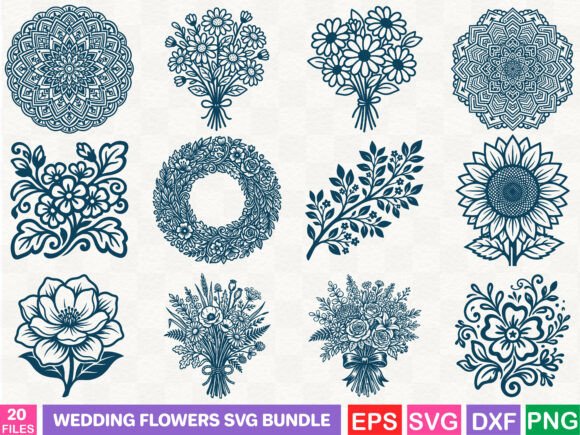
The true utility of high-quality design assets lies in their adaptability. When you receive a collection of floral decorations, the format in which they are delivered is just as important as the artwork itself. Consider the workflow of a busy graphic designer: you might need to scale a rose motif from a tiny corner detail on a menu card to a massive backdrop for a photo booth. This is where vector capability becomes essential.
Having access to AI, EPS, and SVG files ensures that the integrity of the artwork remains intact regardless of the size. A canvas size of 1920px by 1280px serves as a robust starting point, but the beauty of vector formats is that they are mathematically defined, meaning you can enlarge them to billboard size without pixelation. This flexibility is crucial for maintaining a professional standard, whether you are working on large-format print materials or intricate digital layouts.
Integrating Botanicals into Brand Identity
Florals are no longer reserved solely for the wedding day itself. They have become a cornerstone of branding for a variety of businesses in the lifestyle and event sectors. If you are a wedding planner, a photographer, or a boutique stationery shop, your brand identity needs to evoke the same romance and sophistication as the events you manage.
Think about the consistency of your visual language. If your logo features a specific style of greenery, that same motif should carry over to your website headers, your email signatures, and your social media posts. By using editable floral decorations, you can ensure that the botanical elements match your specific color palette. You aren't stuck with generic greens and pinks; you can modify the hues to match dusty rose, sage green, or even moody burgundy themes, ensuring your brand recognition remains strong across all platforms.
Practical Applications for Digital Products and Marketing
For those selling digital products on platforms like Etsy or Creative Market, these floral assets are incredibly valuable. They can be deconstructed and repurposed to create a suite of items that solve problems for your customers. Here are a few ways to leverage these assets for commercial success:
- Stationery Suites: Beyond the invitation, create matching RSVP cards, details cards, and envelope liners. The ability to edit the file allows you to create cohesive sets that brides and grooms are eager to purchase.
- Social Media Templates: Instagram is a visual-first platform. Designers can create pre-made story templates or post backgrounds for photographers and influencers. The PNG format is particularly useful here for overlaying text on transparent backgrounds.
- Packaging Design: If you run a small business selling physical goods—like candles, soils, or jewelry—custom packaging elevates the unboxing experience. Using these floral elements to wrap a box or design a label adds a tactile, premium feel to your merchandise.
- Editorial Layouts: Bloggers and magazine editors often struggle to find stock imagery that doesn't look generic. Using these vector elements to create custom dividers, pull quotes, or background textures can make a digital publication feel curated and high-end.
Technical Workflow and Usability
One of the most significant pain points for creative professionals is the "black box" nature of some design files. You download a resource only to find it is locked, flattened, or difficult to modify. The inclusion of multiple file types—specifically the AI and EPS files—suggests a focus on user control.
When you open these files in software like Adobe Illustrator or Affinity Designer, you should be able to ungroup elements, change stroke weights, and alter individual leaf colors. This level of customization is vital. A "one-size-fits-all" floral arrangement rarely works for every project. Perhaps you need a vertical arrangement for a poster but a horizontal one for a website banner. Being able to manipulate the anchor points and layers allows you to create custom compositions that look like they were drawn from scratch for that specific project.
Enhancing Audience Engagement Through Aesthetics
Visual communication is about emotion. In the context of a wedding, the goal is to evoke feelings of love, celebration, and elegance. High-quality floral graphics contribute to this by adding depth and texture to a flat design. A plain white invitation is clean, but a white invitation adorned with watercolor-style digital florals feels luxurious and intentional.
For marketers and content creators, this translates to better engagement. A social media graphic that features intricate, well-designed botanicals is more likely to stop a user from scrolling than a generic solid-color background. It suggests that the brand pays attention to details—a quality that customers look for when entrusting someone with their special day or purchasing a premium product.
Choosing the Right Style for Your Project
When selecting floral assets, it is important to consider the overall tone of your project. There is a vast difference between a modern, minimalist line drawing of a fern and a lush, Victorian-style arrangement of peonies.
For modern typography projects, you might prefer line art that doesn't compete with bold sans-serif fonts. If you are working on a romantic, vintage-inspired design, heavier, more detailed floral illustrations might be necessary to fill the space effectively. Always test your font pairings against the floral elements. A delicate script font might get lost against a busy, colorful floral background, whereas a bold serif font could stand out beautifully. The goal is harmony, where the text and the graphics support each other rather than fighting for attention.
Ultimately, having a reliable set of editable floral decorations in your toolkit is an investment in your creative efficiency. It allows you to meet client demands faster, produce higher-quality digital products, and maintain a consistent, professional aesthetic across all your marketing assets. By utilizing the provided vector formats and customizing them to fit your vision, you bridge the gap between a standard template and a bespoke design solution.